Between where people build and where apps run sits the part IT owns: who can reach what, what gets approved, what is recorded, and what everything is doing once it is live.
Your private status link is on its way to your inbox.
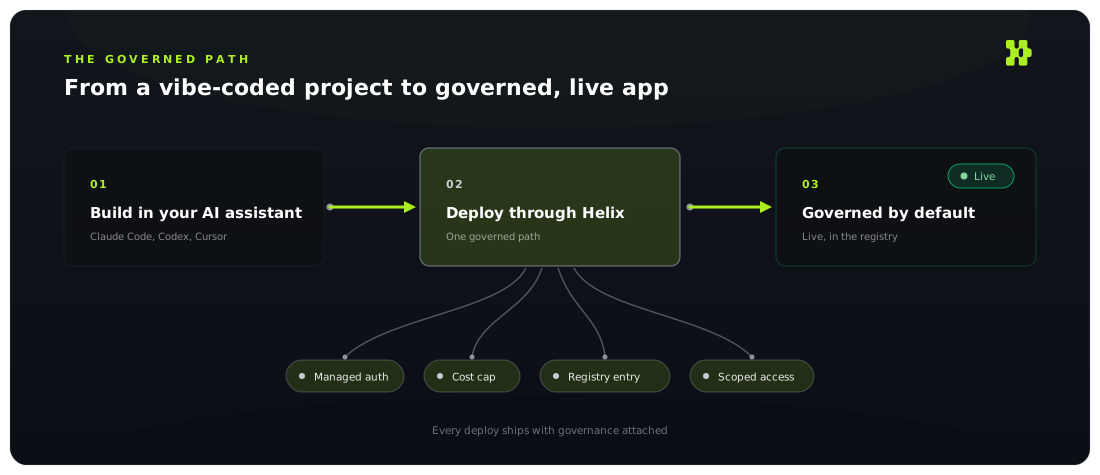
Controls applied after an app is already running are a cleanup exercise. By then the credential is in the repo and nobody knows who owns the thing.
When the only control point is a human review queue, it slows every app equally and scales with headcount rather than policy.
Who deployed it, who was granted access, and what it could reach were never captured, so they have to be reconstructed later.
Every builder invents their own answer to who may open this, which means there is no consistent answer at all.
Each team finds its own way to production, so there is no single place a policy could even be applied.
Because everything reaches production the same way, the deploy path is where policy runs. Not a queue, not a quarterly review.
Who can open it, and what needed a yes
Access is decided by the platform rather than improvised per app, and approval is applied where the risk warrants it.
The record, produced automatically
Because access and deploys run through one path, the record is a by-product of how the system works rather than a log someone remembered to wire up.
What everything is doing once live
Oversight of the estate: what is running, who owns it, and what it connects to, from one admin view across the org.
Control is the layer IT owns. Every app built on the Surface layer passes through it on the way to production, which is what makes it the right place for policy: applied once, to everything, at the moment an app goes live rather than in a review weeks later. Access control, approval, the audit trail, and observability all live here. Below it sits run, where the Foundation layer takes over.
See what applying governance at deploy time actually looks like.
Your private status link is on its way to your inbox.