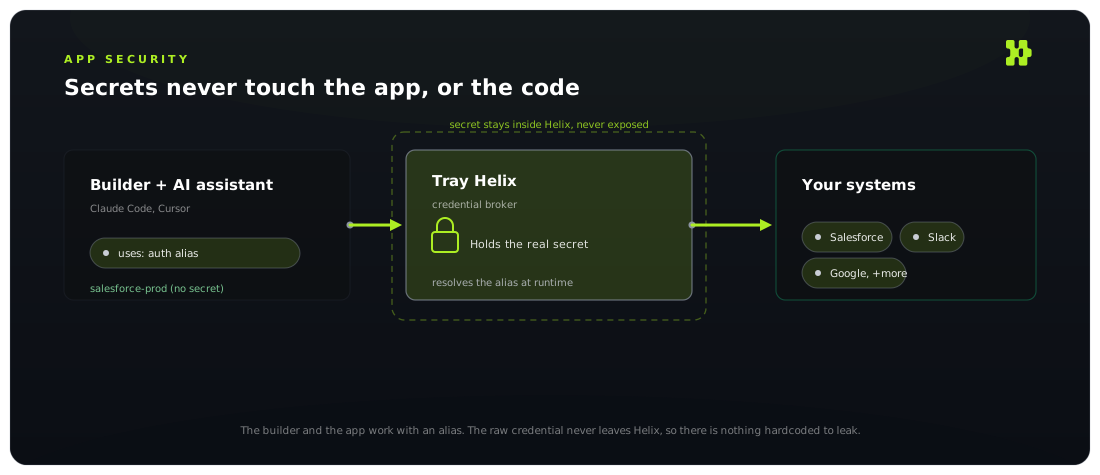
Underneath everything sits the orchestration kernel: the credential broker that keeps secrets out of code, the service that owns the deploy lifecycle, and the runtime that actually runs the apps.
Your private status link is on its way to your inbox.
Connecting to a system, storing a value between runs, shipping a new version. Each builder solves these from scratch, and each solution is one more thing nobody is maintaining.
Reaching Salesforce or Slack means finding a credential and putting it somewhere. It ends up in the repo and outlives the app.
An app that needs to remember something between runs needs a database, which needs a request, which stalls the app.
Without a deploy lifecycle there is no clean way to ship a change, and no way back when a change goes wrong.
Hosting, TLS, and scaling are not things the person who built the app in Cursor can stand up, so the app never ships.
The same Tray.ai runtime that already moves 1T+ processes a year, at 100% execution uptime.
Secrets never in code
Apps reference a managed auth alias, and the broker resolves the real credential at runtime. The builder and the AI assistant never see it.
Deploy lifecycle and versioning
What it means to ship a change, keep track of versions, and know how an app reached production.
Where the apps actually run
Managed hosting with the services an app needs, so no builder has to request infrastructure to go live.
Foundation is the orchestration kernel. It is the part builders never think about and the part that makes everything above it possible: the credential broker so secrets never reach the code, the project service that owns deploy and versioning, and the runtime that actually runs the apps. This is not new infrastructure written for Helix. It is the platform that already moves 1T+ processes a year, which your AI-built apps inherit the moment they deploy.
See what your AI-built apps inherit the moment they deploy.
Your private status link is on its way to your inbox.