The layer people actually touch. They build in the AI assistant they already use, and what they ship shows up somewhere their colleagues can find it and open it.
Your private status link is on its way to your inbox.
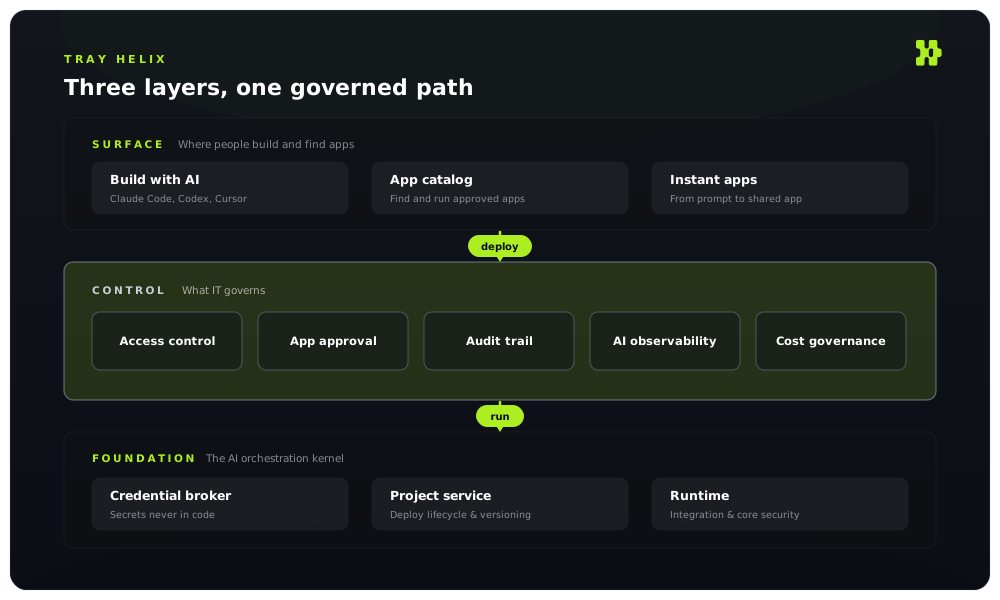
AI assistants made it easy for anyone to produce a working app. What they did not produce is a way for that app to be found, opened, and trusted by anyone else.
It works, it is useful, and nobody else can reach it. The value stops at the person who built it.
An HTML file in Slack or a deploy to a personal account. Whoever holds the link holds the app.
Four teams build their own version of one lookup tool because none of them could find the others.
Asking people to move into a different IDE or a visual builder means they will not move at all.
Helix does not add another place to build. It adds the place the built thing goes.
The assistants your teams already use
Claude Code, Codex, Cursor, and any MCP-compatible assistant. These are the build surface, not something Helix competes with or replaces.
Find and run the approved apps
The other half of the Surface layer is where apps get used. Builders publish, and colleagues open the ones they are cleared for.
The whole arc, without a hand-off
Describe the app, build it, deploy it, send the URL. No separate hand-off to engineering in the middle.
Surface is the layer people touch. On one side it is where apps get built, in the AI coding assistants your teams already use, because the fastest route to adoption is to require no change at all. On the other it is where those apps get used: a catalog where builders publish and colleagues find what they are cleared to open. Between the two sits deploy, which is where the Control layer takes over.
See how an app goes from a prompt to something a colleague can open.
Your private status link is on its way to your inbox.